
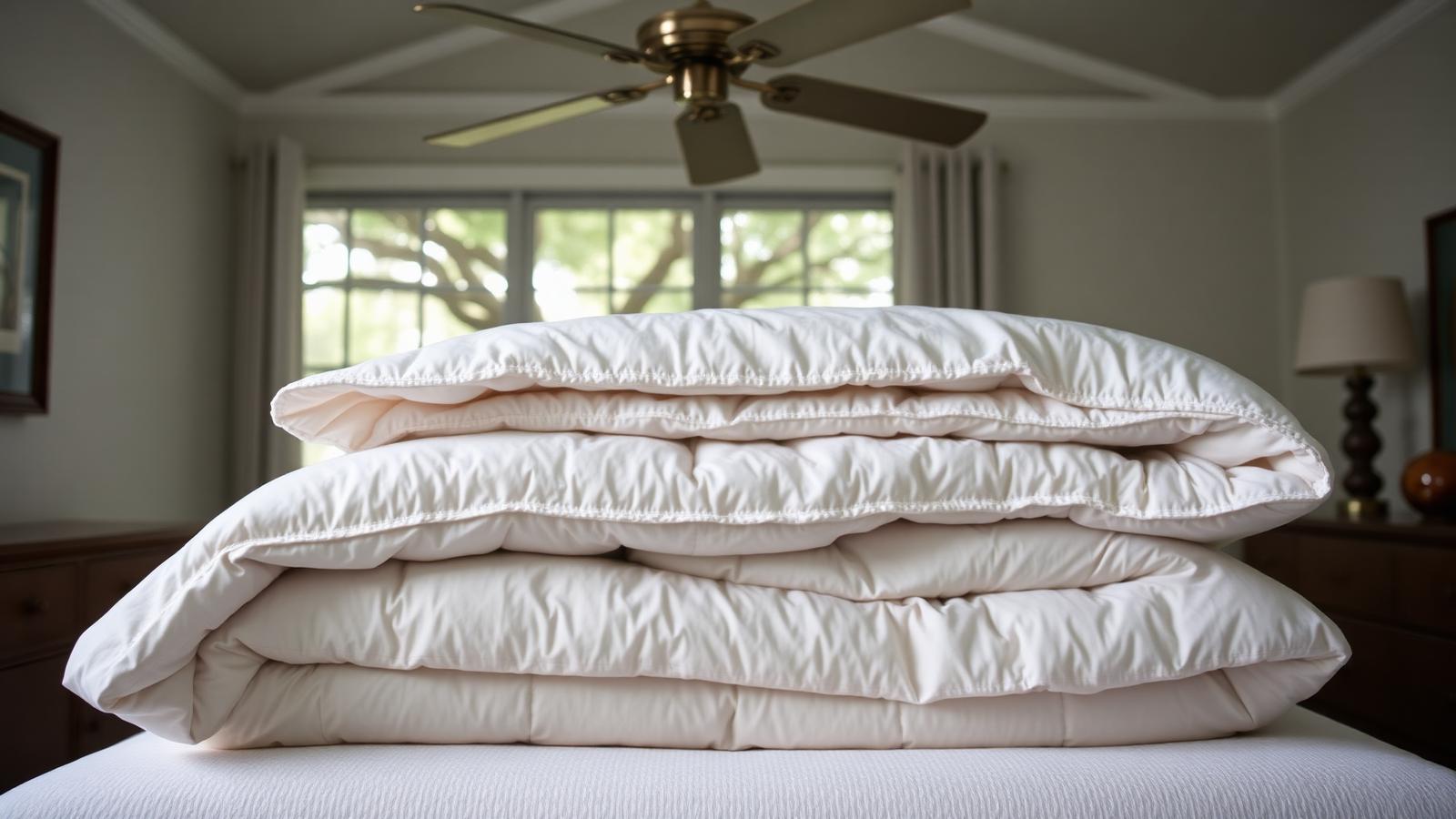
If you've lived on this side of Charleston County for more than a summer, you already know the problem: it's not getting a comforter clean that's hard, it's getting it dry — really dry, all the way through — before the Lowcountry humidity gets a second chance at it. A comforter that comes out of the wash slightly damp in the middle and goes straight into a closet on a July afternoon in Hollywood is a mildew smell waiting to happen, usually about two weeks later, right when you go to use it.
Why comforters go musty here specifically
Mildew doesn't need much — a little residual moisture, warmth, and no airflow. Coastal South Carolina hands you all three for free. Even on a dry-looking day, the ambient humidity here is often 60–80%, which means clothes and bedding air-dry more slowly than they would inland, and a "dry" comforter fresh off the line can still be holding moisture deep in the fill that you can't feel from the outside. Stuff that into a linen closet or a vacuum-seal bag while it's even slightly damp, and you've built a small greenhouse for mildew spores.
Home washing machines make this worse in two ways. First, a queen or king comforter is often too big to agitate properly in a standard 3.5–4 cubic-foot machine — it balls up, detergent doesn't reach the center, and the machine's spin cycle can't wring enough water out before the dry cycle starts. Second, home dryers usually top out at a low-to-medium heat setting with a fixed, short cycle, which is exactly wrong for a thick, dense item that needs sustained heat and tumbling to dry evenly.
How we wash comforters differently
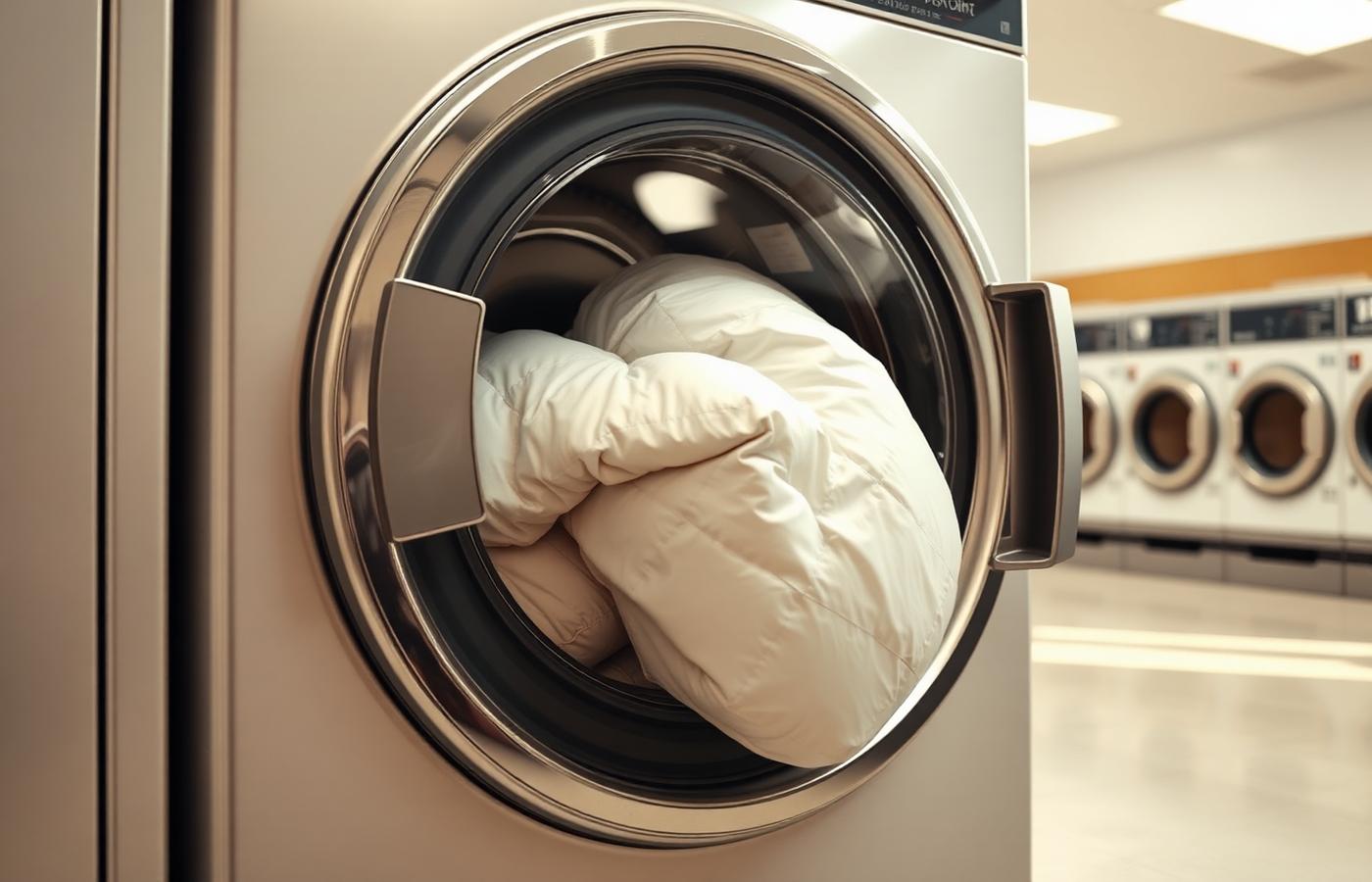
This is the actual reason we brought in a new 100 lb capacity washer: bulky bedding needs room to move. A comforter that's cramped into an undersized machine doesn't get properly rinsed, and detergent residue left in the fibers holds moisture and odor. In our 100 lb washer, a king comforter — even with matching shams — has enough room to tumble freely, get a full rinse, and spin out significantly more water before it ever reaches a dryer. Less water going into the dryer means less time trying to bake moisture out of a dense center, and less risk of that "dried on the outside, damp in the middle" result.
From there, drying is done in stages appropriate to the fill — down, down-alternative, or cotton batting all behave differently under heat, and we adjust accordingly, checking the item rather than just running a timer and calling it done. A comforter isn't finished drying because the outside feels warm and dry; it's finished when the center is dry too, and that's worth an extra ten minutes rather than a mildew smell in three weeks.
What this costs
Bedding and comforter cleaning runs $19.50–$27.00, depending on size and fill — a twin comforter is on the lower end, a king with a heavier down-alternative fill on the higher end. That price includes the wash, the full dry cycle, and folding, so it comes back ready to go straight back on the bed or into storage. Compare that to feeding a home machine repeatedly, running a laundromat dryer for an hour longer than it should take because the comforter went in still wet, or replacing a comforter early because it never quite smells right again after a bad wash — $19.50 to $27.00 usually looks pretty reasonable next to those options.
Storing bedding through a Lowcountry summer
If you're rotating comforters seasonally — a heavier one for the rare cold snap, a lighter one for summer — storage is where a lot of the damage actually happens, not the wash. A few things that matter more here than they would somewhere drier:
- Never store anything less than fully dry. If you're not sure, run it through a dryer again rather than guessing. It's cheap insurance against a much worse smell later.
- Skip the sealed plastic tub for bedding. Plastic traps whatever residual humidity is in the fabric and in the air around it. A breathable cotton storage bag or a pillowcase lets the item keep breathing.
- Avoid attics, garages and closets on exterior walls in peak summer — they run hotter and more humid than the rest of the house and are classic mildew spots. A climate-controlled closet inside the house is worth the space it takes up.
- Add a moisture absorber (a small silica or charcoal packet) to the storage bag if the item will sit for more than a month or two, particularly June through September.
If a comforter already smells musty
A comforter that's picked up a faint mildew smell isn't necessarily ruined — but a home wash usually isn't enough to fully clear it, since the smell often means mildew has taken hold somewhere inside the fill, not just on the surface. Bring it in and we can run it through a proper wash-and-fully-dry cycle in the 100 lb washer; catching it early, before the smell has set for months, gives the best shot at getting it back to normal rather than needing replacement.
Ready to get a comforter, duvet or set of quilts properly clean and properly dry? See full pricing and details on our comforters & bedding page, or bring it in and use our self-service machines yourself if you'd rather run it on your own schedule — the 100 lb washer is available to any customer on the floor, not just wash & fold orders.